
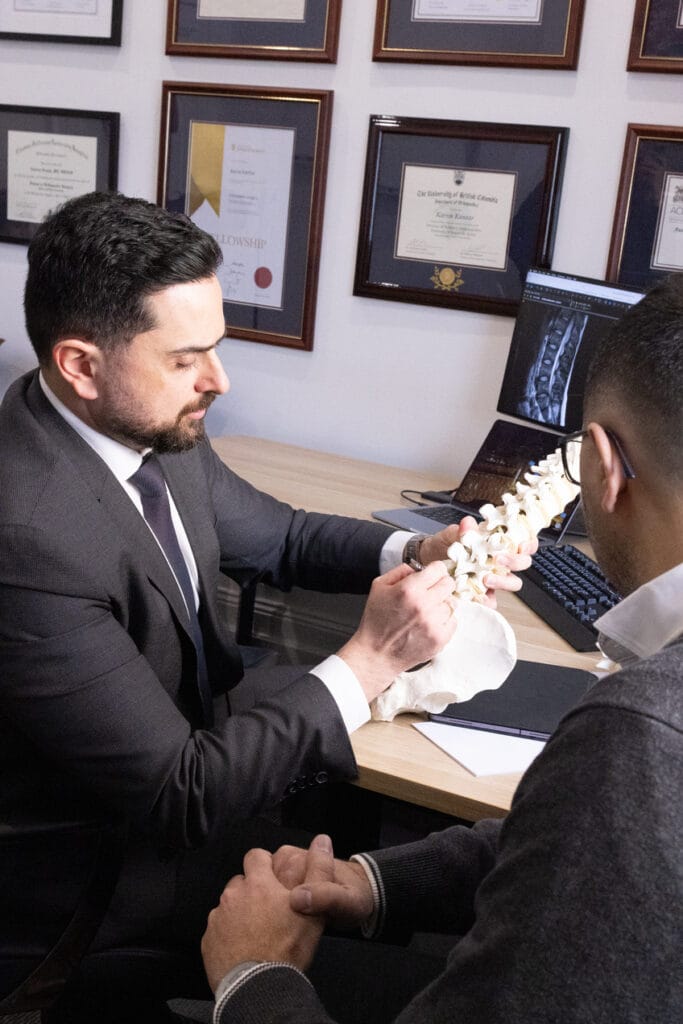
Scoliosis and kyphosis are two distinct spinal conditions that affect posture and spinal alignment, often raising concerns for patients and parents alike. Understanding these conditions is essential to recognising when to seek specialist advice.
Scoliosis is characterised by a sideways curvature of the spine, often forming an “S” or “C” shape. It can develop during childhood or adolescence (paediatric scoliosis) or later in adulthood (adult scoliosis). Common signs include uneven shoulders, a prominent shoulder blade, or an uneven waist. While mild scoliosis may require monitoring, severe cases might need surgical intervention to prevent progression and improve function.
Kyphosis involves an excessive forward rounding of the upper back, sometimes referred to as a hunchback posture. Similar to scoliosis, it can affect both children and adults. Symptoms can include back pain, stiffness, and in severe cases, breathing difficulties if spinal deformation compresses the chest cavity.
Early diagnosis and personalised treatment plans are vital for both conditions, whether that involves bracing, physical therapy, or surgery. Consulting an experienced spine specialist like Dr Karim H. Kantar ensures access to the latest evidence-based care tailored to each patient’s unique needs.